
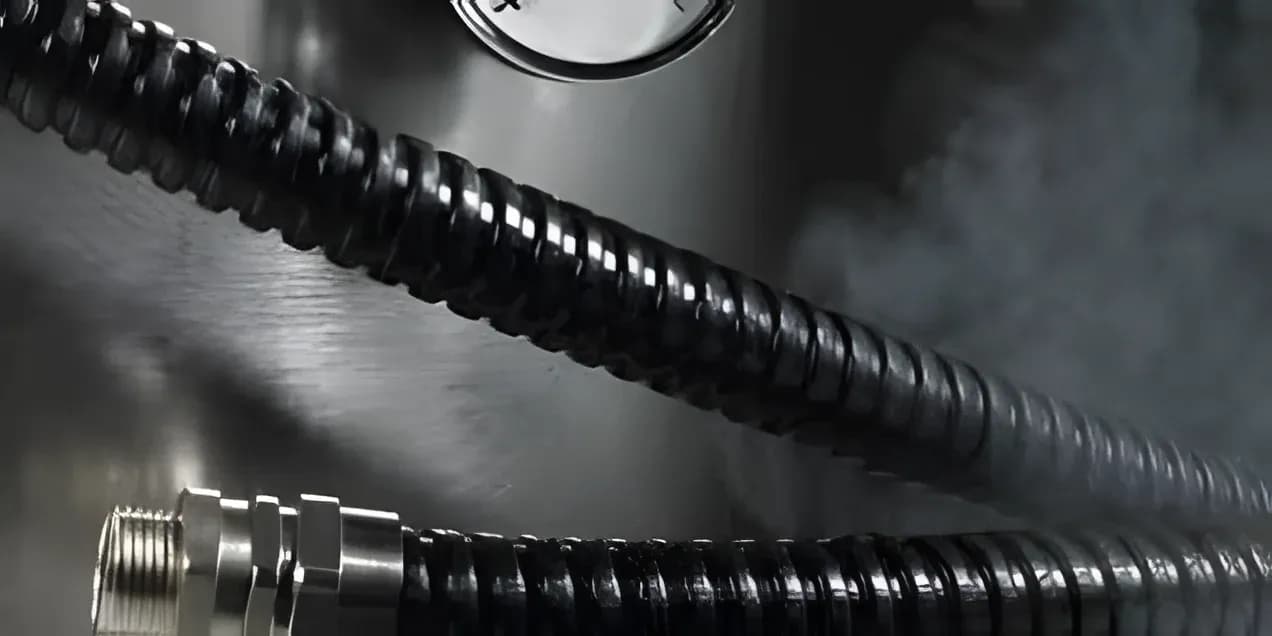
Guide · 5 min read
How to choose a flexible steel conduit
In short
Four questions decide the right flexible steel conduit: ambient temperature, exposure to water and dust, electromagnetic interference, and cable size. Temperature picks the material, sealing picks the coating, interference picks the braid, and the cable bundle picks the diameter.
1. How hot is the environment?
Material selection starts with operating temperature. For uncoated flexible steel conduit, the grade of steel sets the limit.
| Material | Operating temperature | When to choose it |
|---|---|---|
| Galvanized steel | −50 °C / +300 °C | Higher temperatures |
| Stainless steel 304 / 316L | −100 °C / +600 °C | Corrosive environments, very high or very low temperatures |
For coated conduit the coating, not the steel, sets the limit: PVC-coated conduit operates from −25 to +90 °C and liquid-tight PVC-jacketed conduit from −20 to +105 °C.
2. Is there water, oil or dust?
Uncoated steel conduit is rated IP40: it protects cables mechanically but does not keep water out. Wet, oily or dusty locations call for a coated type.
| Conduit type | Protection rating |
|---|---|
| Uncoated steel conduit | IP40 |
| Coated steel conduit (PVC or halogen-free) | IP54–IP66 |
| Liquid-tight steel conduit | IP66–IP69 |
3. Is electromagnetic interference a risk?
Where drive, motor and signal cables run side by side, choose the steel-braided type; the braid gives very high shielding against electromagnetic interference (EMI). If sealing is needed as well, the liquid-tight braided type combines both at IP66.
4. Which diameter?
Size the conduit by its inner diameter: pick the size the cable bundle passes through comfortably. On long runs, the guide-wire type makes pulling cables easier.
| Trade size | Inner diameter |
|---|---|
| 1/4" | 9 mm |
| 3/8" | 11 mm |
| 1/2" | 16 mm |
| 3/4" | 21 mm |
| 1" | 26 mm |
| 1 1/4" | 35 mm |
| 1 1/2" | 40 mm |
| 2" | 50 mm |
| 2 1/2" | 63 mm |
| 3" | 75 mm |
| 4" | 102 mm |
5. Is it an enclosed, occupied space?
In enclosed spaces with many people, a halogen-free (LSZH) coating is preferred: it releases no halogen gases in a fire. Both the coated and the liquid-tight series come in halogen-free versions.
Do not forget the fitting
A conduit only keeps its protection rating with a matching fitting. Use the IP54 steel conduit fitting for uncoated conduit and the IP67 liquid-tight fitting for liquid-tight conduit.
- Temperature decides the material: galvanized or stainless.
- Water and dust decide the coating: uncoated, PVC-coated or liquid-tight.
- Where interference is a risk, choose the steel-braided type.
- Size by inner diameter, to suit the cable bundle.
Related products
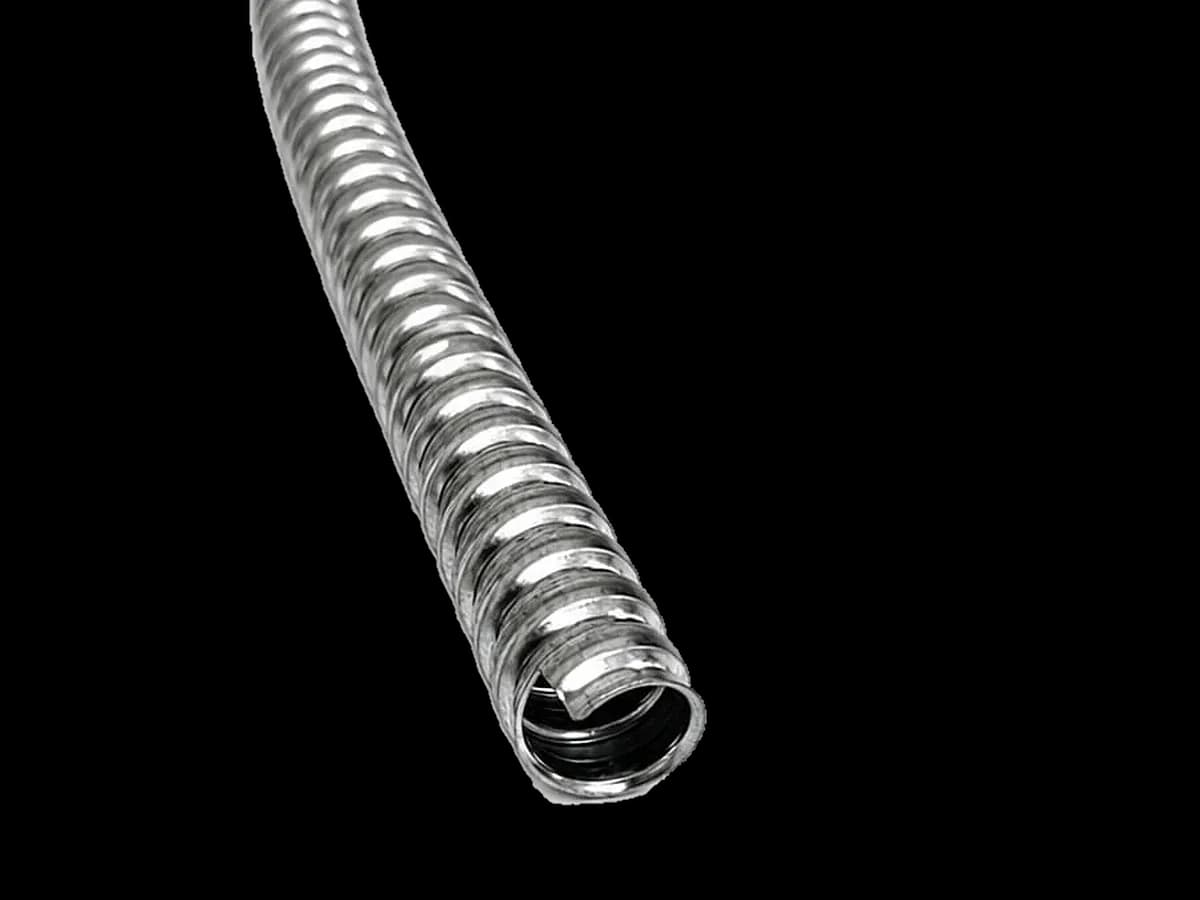
- IP40
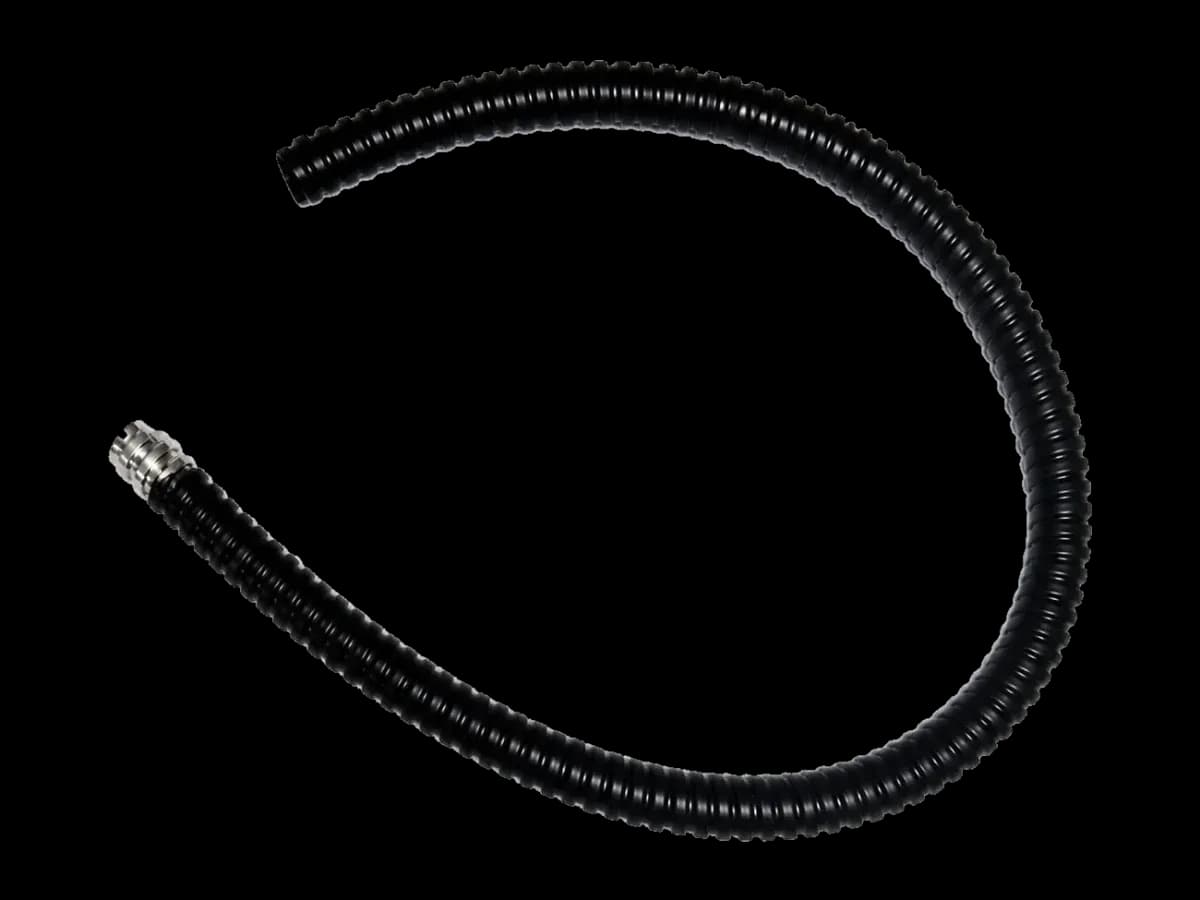
- IP54–IP65
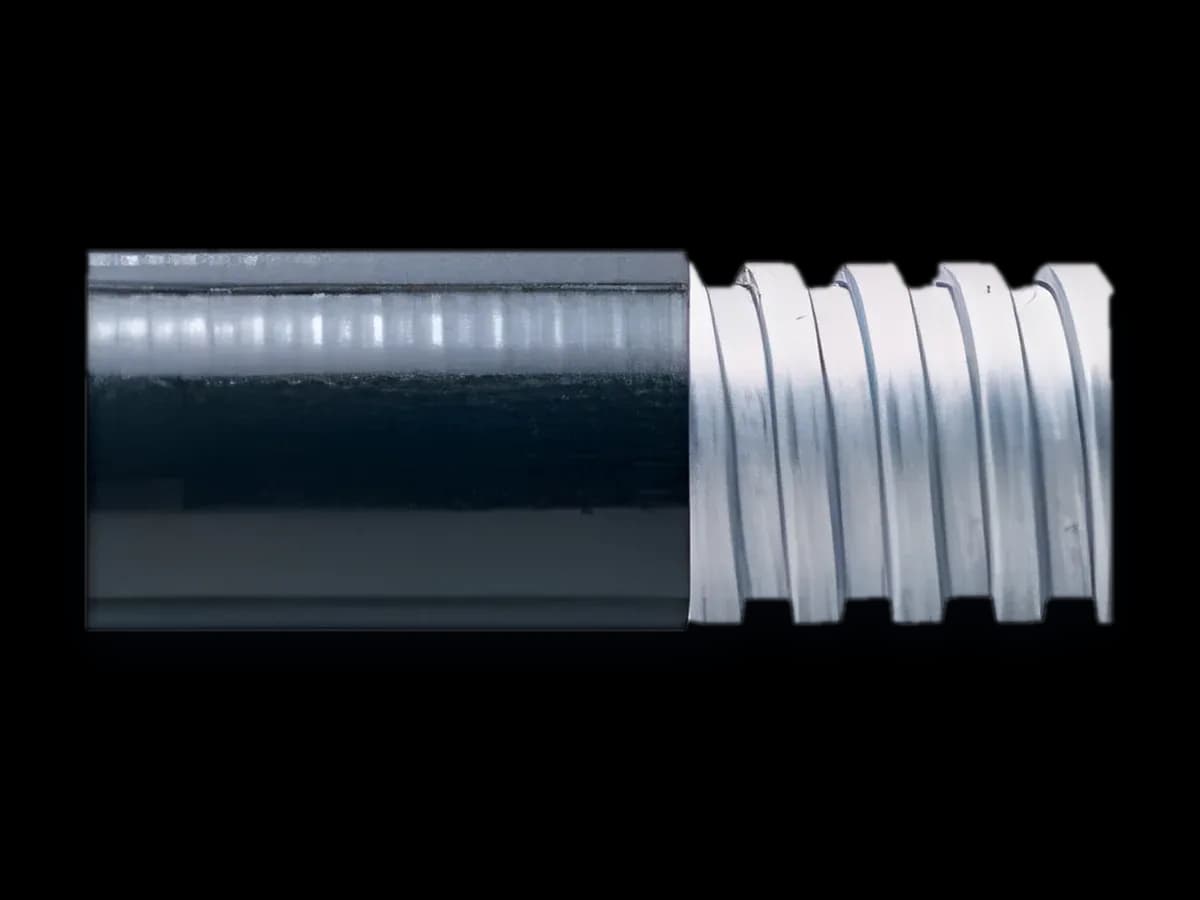
- IP66–IP68
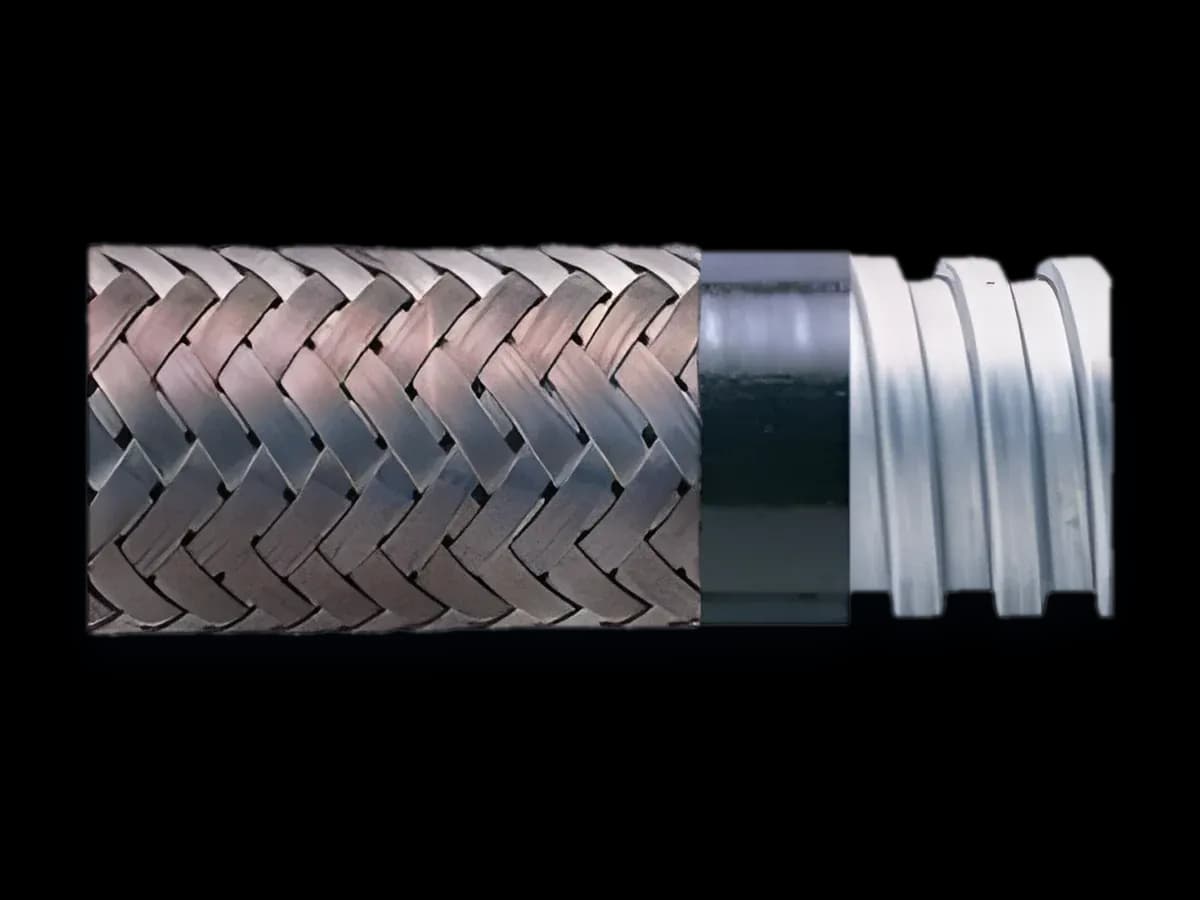
- IP66
- EMI
More articles
Technical4 min read
What does IP68 mean? IP ratings explained
In an IP code the first digit is protection against dust and solid objects, the second against water. IP68 means fully dust-tight and able to withstand continuous immersion.
Technical3 min read
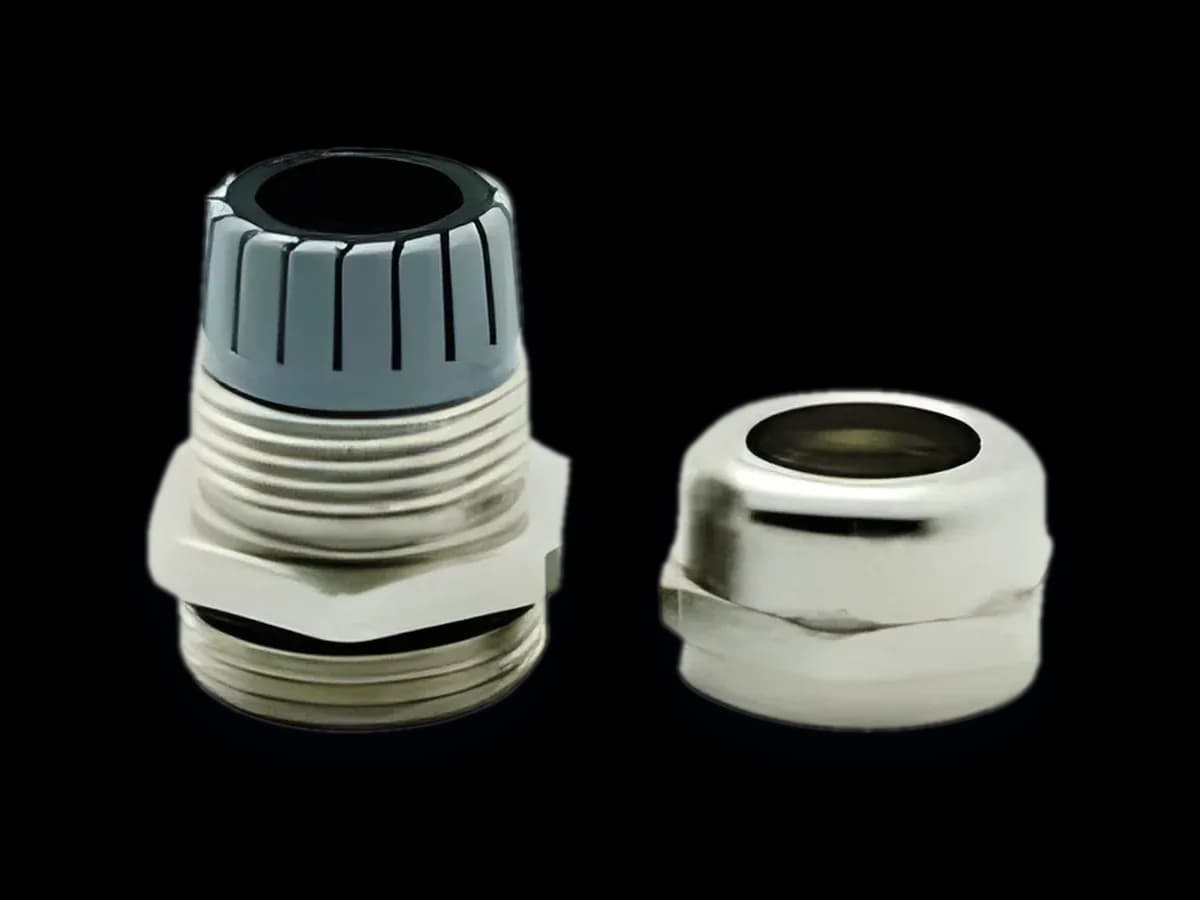
PG vs metric gland threads: the difference and which to choose
PG and metric are two separate thread standards for cable glands, and they do not fit each other. New designs use metric threads; for existing enclosures with PG entries, choose a PG gland or an adapter.